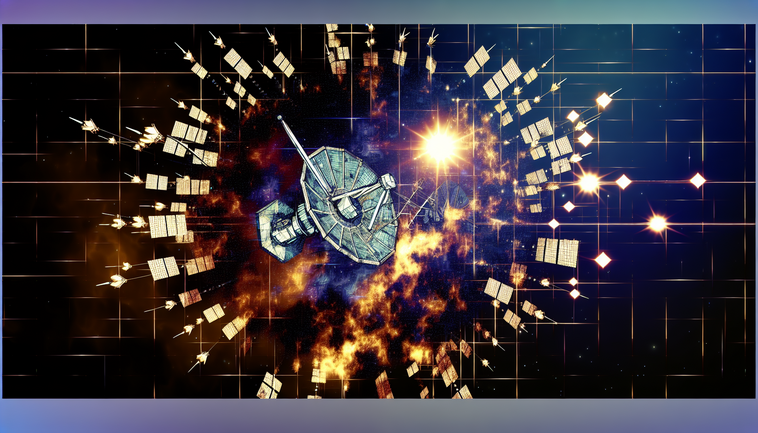
Once seen as a boundless domain for science and exploration, outer space has increasingly become a staging ground for geopolitical rivalry. The recent takeover of communication satellites via cyber intrusion marks a watershed moment, illustrating that the heavens are no longer immune from Earthly hostilities.
Last month’s cyber onslaught disrupted dozens of satellites, causing critical communication outages and provoking international outrage. Although authorities pointed fingers at Moscow, this incident underscores a universal vulnerability: any state or well-funded actor with cyber expertise can broadcast chaos from orbit.
Behind the scenes, reports suggest that Russia is racing to deploy orbital strike platforms—systems capable of blinding or destroying satellites with directed energy or kinetic impactors. Such technologies threaten to unravel the spaceborne networks that underpin navigation, weather forecasting and global communications.
From a national security standpoint, the stakes could not be higher. Militaries and civilians alike depend on a constellation of satellites for real‐time intelligence, precision targeting, and the synchronization of financial markets. A single successful attack in space could trigger cascading failures back on Earth.
Yet legal and diplomatic frameworks have struggled to keep pace. The 1967 Outer Space Treaty prohibits national appropriation and nuclear weapons in orbit, but it says little about cyber sabotage or emerging anti-satellite capabilities. In this murky environment, norms are being written retroactively under the pressure of fast-paced innovation.
In my view, the fusion of cyber operations with space weaponry represents a paradigm shift. Defense planners must embrace resilience—hardening systems through distributed architecture, rapid failover and international information-sharing. Deterrence in space will rest as much on digital agility as on diplomatic agreements.
Ultimately, our future in orbit hinges on collective responsibility. Absent clear rules of engagement and mutual verification, the sky may become a theater of perpetual conflict. Only a renewed commitment to transparency, arms-control dialogues and cooperative defense measures can preserve space as a shared environment rather than a contested battlefield.