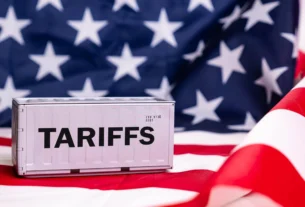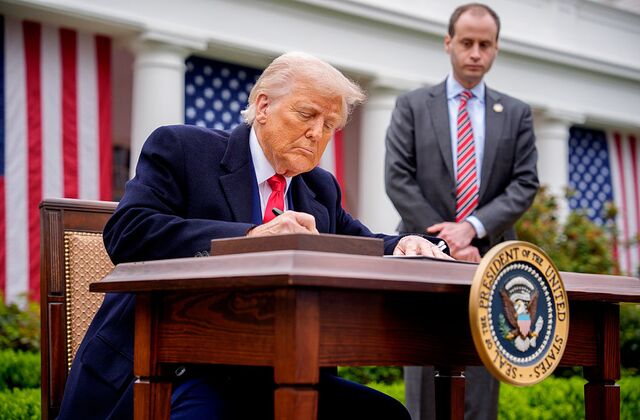
Overview: A Bold Economic Shift in Trade Policy
On April 5, 2025, in a sweeping move that sent shockwaves across global markets, former President Donald J. Trump announced the imposition of a new 10% across-the-board tariff on all imported goods, regardless of country of origin. The announcement marks one of the most significant shifts in American trade policy in decades and reinforces Trump’s longstanding “America First” doctrine.
The declaration, made during a high-profile speech at a political rally in Ohio, has already triggered intense responses from major trading partners, financial markets, and domestic industries. Trump emphasized that the tariff is designed to protect American jobs, reduce the trade deficit, and reinvigorate U.S. manufacturing.
What Do the 10% Tariffs Mean for the Economy?
At its core, the 10% universal import tariff is a blanket tax on all foreign goods entering the United States. This broad-scope approach affects nearly every industry, from consumer electronics to automobiles, textiles, and food products.
Key implications include:
- Increased consumer costs as imports become more expensive.
- Potential inflation spike due to higher retail prices on goods ranging from clothing to electronics.
- Trade tensions escalating between the U.S. and major economic powers like China, the European Union, Mexico, and Canada.
- Short-term manufacturing boost as American producers become more competitive domestically.
- Uncertainty in global markets, with volatility expected in sectors dependent on international supply chains.
This tariff policy isn’t without precedent. During Trump’s first term (2017–2021), the administration imposed targeted tariffs on steel, aluminum, and certain goods from China under Section 301, citing unfair trade practices. However, this 2025 policy is notably broader and more aggressive.
Trump’s Justification: “America Can’t Be Second Anymore”
In his rally, Trump stated:
“We are going to bring factories back to America. No more job outsourcing, no more trade deficits. America can’t be second anymore—we will be number one again.”
According to Trump, the new 10% tariff is a universal tool to level the playing field and rebuild American industry. He argued that for too long, foreign nations have benefited from “unfair trade deals” that have weakened the U.S. economy, damaged domestic industries, and exported American labor offshore.
Supporters’ View: Tariffs as a National Reinvestment Strategy
Proponents—including several Republican lawmakers and domestic manufacturing groups—applauded the measure. They argue it will:
- Revitalize U.S. manufacturing by making American-made products more competitive.
- Encourage companies to reshore production facilities previously moved overseas.
- Generate government revenue without increasing income taxes.
Groups like the Coalition for a Prosperous America praised the decision, calling it “a bold move to secure America’s economic independence.”
Opposition Mounts: Global and Domestic Pushback
Despite some praise, the announcement has drawn considerable criticism. Economists, trading partners, business coalitions, and even some Republican senators have voiced their concern:
- U.S. Chamber of Commerce called the tariffs “a tax on American consumers and businesses.”
- European Union and China indicated they are preparing retaliatory measures.
- Retailers and importers warn of supply chain chaos and soaring prices.
From an international perspective, the tariffs may violate World Trade Organization (WTO) rules. Already, several countries are rumored to be drafting official complaints.
Impact on Global Supply Chains and Trade partners
The immediate impact of these tariffs is likely to be felt by major exporters to the U.S., including:
- China – already under intense scrutiny from U.S. lawmakers, will likely see further scrutiny and reduction in exports.
- Mexico and Canada – long-time partners under the USMCA agreement could demand exemptions or negotiate retaliatory tariffs.
- European Union – especially automotive and luxury goods industries could be significantly affected.
- Japan and South Korea – facing pressure on electronics and vehicle exports.
Foreign governments are also concerned about the spillover effects. Emerging markets dependent on U.S. trade may struggle as American demand wavers under higher prices.
How Will This Affect the Average American?
While Trump’s goal is to strengthen domestic jobs and industry, the average American could see the following short-term effects:
- Higher prices on imported goods such as smartphones, washing machines, and clothing.
- Disruption in product availability, especially for tech and auto parts dependent on global suppliers.
- Increased cost of living due to inflation tied to rising import costs.
Industry analysts predict that families could spend between $500–$1,200 more per year due to the added tariff burden on consumer goods.
Political Consequences Ahead of 2026 Elections
With control of Congress potentially shifting in 2026, the tariffs are likely to become a central campaign issue. Trump’s policy is viewed as a way to energize his base, especially in Rust Belt states like Ohio, Pennsylvania, and Michigan. However, Democrats and moderate Republicans argue that:
- The tariffs are economically risky and may reduce GDP growth.
- The move could lead to job losses in sectors reliant on global supply chains, such as tech and retail.
- Consumer confidence may decrease ahead of the holiday shopping season.
As a result, the country may see contentious debates over trade policy become a focal point in the upcoming election cycle.
Conclusion: A Brave New Trade Era
Trump’s decision to implement a 10% tariff on all imports has put both American and global markets on notice. While he maintains that the policy will reinvigorate domestic industry and bring back jobs, critics warn of isolationism, trade retaliation, and inflation.
Only time will tell whether this bold economic gamble will prove visionary or detrimental. One thing is certain: the world is now paying very close attention to how America reshapes its role in the global trade order.
What Comes Next?
As these tariffs go into effect, key developments to watch include:
- Retaliatory tariffs from foreign governments.
- Legal challenges in domestic and international courts.
- Congressional response, particularly bipartisan efforts to mitigate potential negative effects.
In this new phase of protectionist policy, American businesses, politicians, and consumers will need to adapt swiftly to a shifting global economy — one shaped, once again, by Donald Trump’s unmistakably bold playbook.