“`html
Introduction to Steam Deck: Handheld PC Gaming Revolution
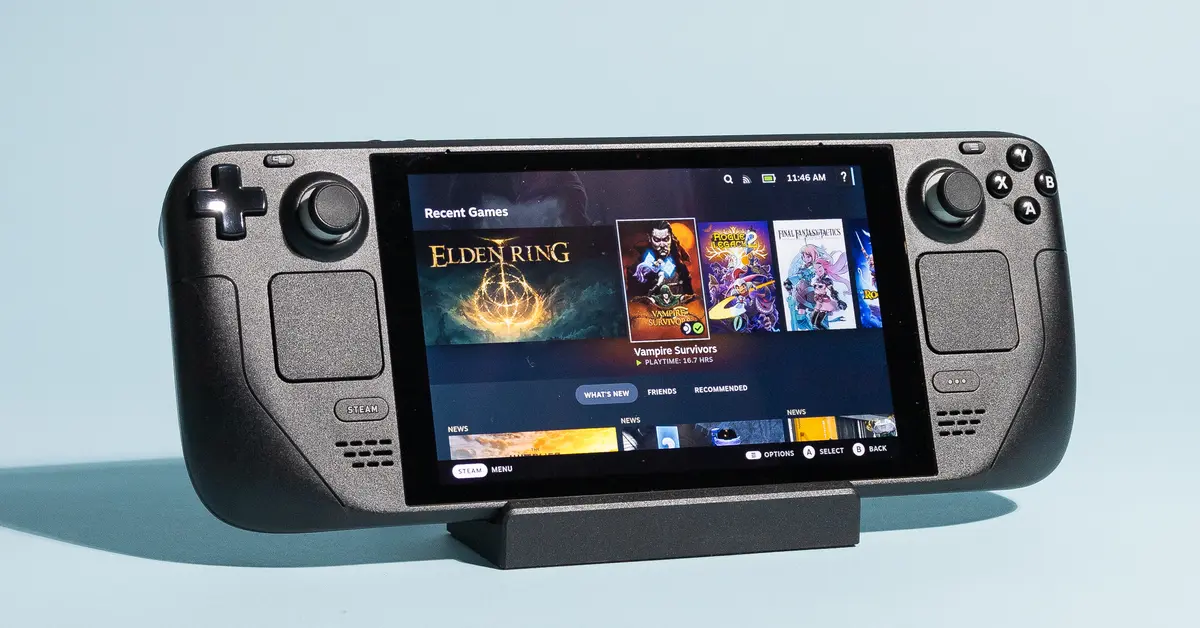
The Steam Deck represents a pivotal advancement in the handheld gaming market, merging the power of a gaming laptop with the portability of a console. As a handheld device designed by Valve, it allows gamers to access their complete Steam library anywhere. This innovative portable console stands out not only for its gaming capabilities but also for its distinct ergonomic design and customizable controls, elevating it above traditional handheld systems like the Nintendo Switch.
Hardware and Performance: What Powers the Steam Deck?
The Steam Deck is powered by a custom AMD APU, featuring a combination of a Zen 2 CPU and RDNA 2 GPU architecture. This powerful duo includes four cores and eight threads running at a maximum clock speed of 3.5 GHz while the GPU operates at up to 1.6 GHz, yielding approximately 1.6 teraflops of performance, making it capable of running most AAA games at 720p with satisfactory frame rates. Titles such as Shadow of the Tomb Raider demonstrate its capabilities, achieving around 30-60 FPS on medium settings, depending on the game’s optimization.
Additionally, the Steam Deck supports AMD’s FidelityFX Super Resolution (FSR), which provides enhanced game performance while maintaining high graphical fidelity. With 16 GB of LPDDR5 RAM and storage options ranging from 64 GB eMMC to 512 GB NVMe SSD, users can expect quick load times and smooth performance, further distinguishing the device from competitors.
Software and Compatibility: Gaming Flexibility on the Go
SteamOS, the operating system governing the Steam Deck, facilitates a versatile gaming experience tailored for portability. This Linux-based system allows seamless access to a wide range of titles, including popular AAA games and indie favorites, while supporting over 80% of the top 100 games on Steam. Notably, the system’s compatibility layer, Proton, enables Windows games to run seamlessly on a Linux platform, amplifying gaming options for users.
Furthermore, the open nature of SteamOS allows for significant customization, offering gamers the ability to tweak settings for optimal performance. This adaptability ensures that both casual gamers and competitive players have their needs adequately met, transforming the Steam Deck into a robust portable gaming solution.
Practical Tips and Tricks for Steam Deck Users
To enhance your experience with the Steam Deck, implementing several practical tips can significantly improve performance and usability. For instance, to extend battery life, reduce screen brightness and enable battery-saving modes; disconnect Bluetooth and Wi-Fi when not in use; and adjust game settings to lower graphical fidelity for more demanding titles. For detailed battery optimization strategies, visit this resource.
Furthermore, take advantage of control customization options, which enable users to remap buttons and adjust sensitivity settings. Using Steam’s Big Picture Mode can help tailor controls for each game, ensuring a personalized gaming experience. Moreover, organization is key; categorize your game library and uninstall rarely played titles to save space while staying up-to-date with community-sharing tips for game management. For more insights, visit our article on networking tips.
Future of Steam Deck: Updates, Community, and What to Expect
Looking ahead, anticipated software updates for the Steam Deck are set to enhance user experience significantly. Expected improvements focus on refining the interface and extending compatibility with various games, alongside features like better cloud saving and game streaming options. Valve is known to actively respond to community feedback, tailoring updates to meet the demands of users.
The burgeoning accessory ecosystem surrounding the Steam Deck stands witness to community creativity, with manufacturers delivering various peripherals that expand the device’s functionality and design. The interaction between users and developers, as seen in community forums such as Reddit, plays a crucial role in influencing future updates and accessory developments. This dynamic relationship will undoubtedly continue to shape the trajectory of the Steam Deck, ensuring it evolves alongside its user base. For further insights into the Steam Deck, check out our article on the ultimate tech junkie’s survival device.
Sources
- Divergent Existenz – All You Need to Know About Networking
- Divergent Existenz – Best Gadgets Launching Soon
- Divergent Existenz – The Ultimate Tech Junkie’s Survival Device: The Steam Deck
“`