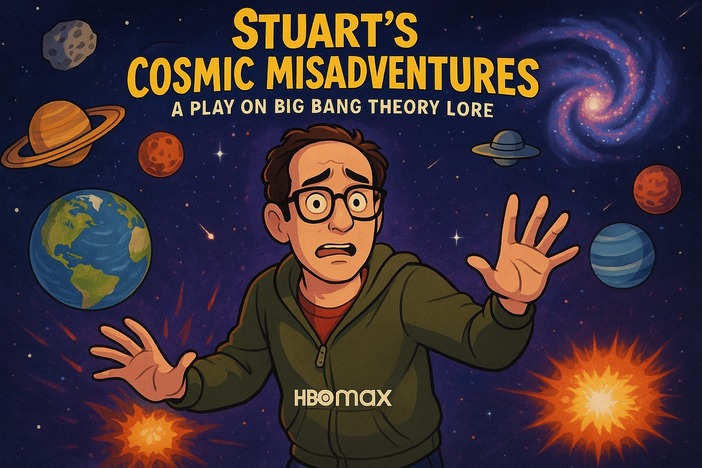
In an unexpected twist, the creators of the new HBO Max series Stuart Fails to Save the Universe have taken a bold step that could shake up the beloved universe of The Big Bang Theory. Contrary to what longtime fans might expect, this spinoff won’t cling to the sacrosanct lore of its predecessor. Instead, it’s embarking on a journey that is consciously incongruent with the established intricacies of its parent show. The creators describe this deviation as a ‘deliberate choice,’ sparking curiosity and skepticism alike among audiences.
Breaking away from the canon might seem like a risky move, but in the context of a multiverse—a concept widely embraced in modern storytelling—it opens the door to endless possibilities. By not being constrained to sticking to a rigid storyline, the show can explore new dimensions of character development and narrative creativity. This approach offers both a sense of liberation and the thrill of unpredictability, which could intrigue existing fans and attract a new audience unfamiliar with the original series.
Stuart, a character who brought understated humor as the comic book store owner frequently entangled with the original ensemble, finally steps into the spotlight. His adventures across the multiverse aren’t just about saving, or failing to save, universes; they are about exploring the comedic aspects of his character in environments that defy continuity. This makes room for humor that is fresh and often unexpected, providing an exhale from the meticulous interweaving found in The Big Bang Theory.
This bold narrative pivot also reflects a broader trend in television where traditional storylines are being reimagined to captivate an audience hungry for innovation. The trend is evident in the rise of multiverse narratives, where alternate realities are playgrounds for creative exploration. Stuart’s journey might be less about cosmic stakes and more about discovering paths not taken, a metaphorical expedition reflecting modern existential themes wrapped in comedic undertones.
In conclusion, while Stuart Fails to Save the Universe breaks away from Big Bang Theory lore, it might find something more significant than continuity—reinvention and resonance. For the audience, it’s an opportunity to engage in something both familiar and startlingly new. Whether this departure will resonate with die-hard fans or alienate them is yet to be seen. However, in the spirit of multiverse storytelling, it presents a gamble worth taking, adding a different gleam to Stuart’s world, one that’s refreshingly untethered by the weight of its origin story.