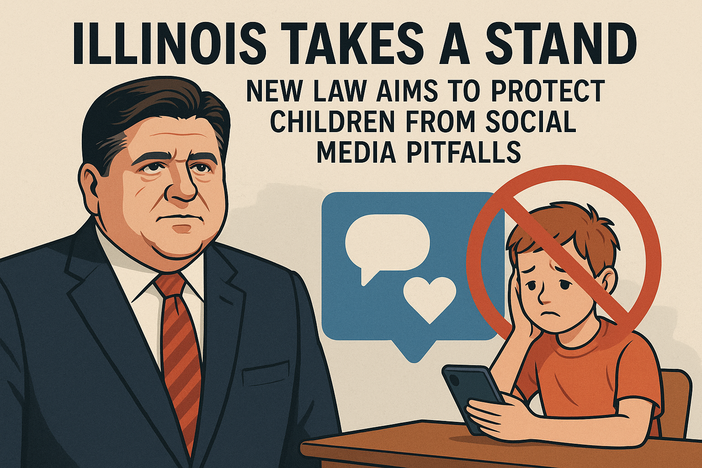
In a bold move to prioritize children’s well-being over digital engagement, Illinois Governor JB Pritzker recently enacted groundbreaking legislation aimed at regulating how social media companies interact with younger users. This new law targets the elusive and often contentious algorithms that are designed to keep children hooked on their screens. By addressing the addictive nature of these platforms, Illinois hopes to spearhead a larger discussion about the ethics of digital engagement and its impact on developing minds.
The legislation comes at a crucial time when concerns about the excessive use of social media by children are mounting. Studies have shown that children and teenagers often spend hours scrolling through their feeds, often at the expense of real-world interactions and activities. The addictive algorithms, engineered to prolong engagement by constantly offering enticing content, are a significant factor in this behavioral shift. By implementing this law, Illinois aims to reduce the grip these algorithms have over children, encouraging a more balanced approach to technology use.
One of the key elements of this law is its focus on transparency and accountability for tech companies. Social media platforms will now have to disclose their algorithmic methods and affirmatively demonstrate how they protect children from addiction-causing features. This progressive step not only safeguards young users but also sets a precedent for other states to follow, potentially leading to more widespread reforms in the national landscape.
Critics may argue that regulating algorithms could stifle innovation or overreach into the operations of private companies. However, supporters of the legislation contend that this balance is necessary to protect future generations from the unforeseen consequences of technology’s rapid evolution. By holding companies accountable, Illinois is pushing the dialogue forward and prompting a reexamination of the social responsibility that accompanies digital innovation.
As this law takes effect, it remains to be seen how social media companies will adapt and whether similar measures will be adopted elsewhere. Regardless of the immediate outcomes, Illinois has undoubtedly catalyzed a critical conversation at the intersection of technology, regulation, and child welfare. In an increasingly digital world, safeguarding the mental and emotional health of young people is not just a state issue, but a global imperative.