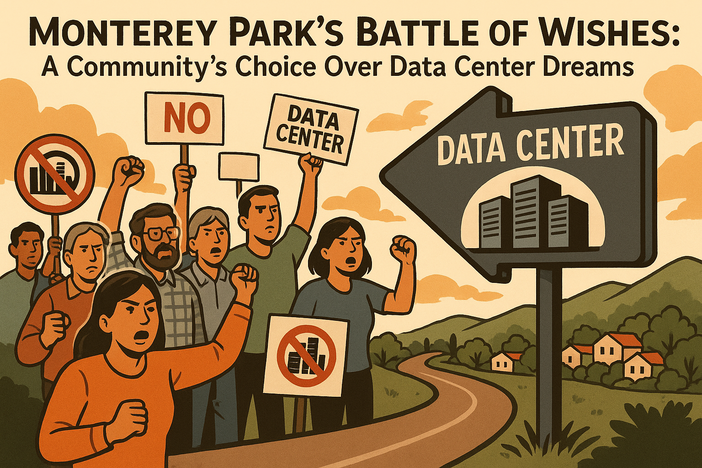
In the heart of Southern California, Monterey Park faces a crossroads where the demands of modern technology clash with the desires of its community. A proposed data center has been pitched as a solution to the city’s economic challenges, promising jobs and technological advancement. Yet, for the residents, this proposal is less of a dream and more of a disruption. As the city opens the decision to its community, residents find themselves empowered to shape their future, weighing the promise of progress against the sanctity of their everyday lives.
The allure of a data center might seem tempting; after all, the digital age continues to gallop forward, and such centers promise economic benefits. They herald jobs, not just in the construction phase, but also in ongoing operations. However, this vision is not without its drawbacks. Concerns about environmental impact, noise pollution, and increased traffic have been brought to the forefront by a vocal section of the community, worried about the long-term ramifications on their beloved city landscape.
Data centers are not merely structures; they are behemoths that consume vast resources. Monterey Park residents are well aware of this, many questioning whether benefits outweigh the potential adverse impacts. While proponents argue that the data center would position Monterey Park as a forward-thinking city, local opinions are more diversified, suggesting viable alternatives might better serve the community’s needs without compromising its character.
Alternatives being discussed by residents go beyond the digital horizon. Suggestions like parks, community centers, or educational facilities have surfaced. Such projects not only promise to retain the city’s unique charm but also cater more directly to local needs. The emphasis is on diversity, with a clear preference for options that enhance social integration and community bonding, rather than technological transformation that feels imposed rather than invited.
Ultimately, the decision rests on the shoulders of Monterey Park’s residents, who now find themselves sculpting the narrative for their city’s evolution. This moment becomes more than just accepting or rejecting a data center; it encapsulates the power of collective agency, reflecting broader trends about urban development and local autonomy. As the city navigates this turning point, its choice will echo lessons about prioritizing people over profit, sustainable growth over hurried progress, and preserving community identity in an increasingly digital world.