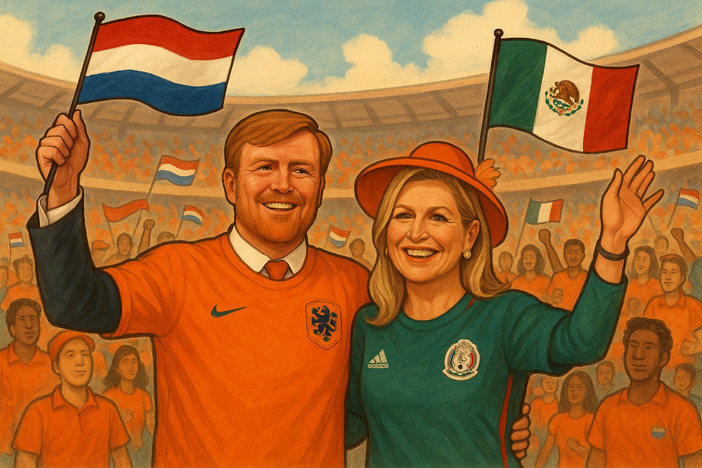
Amidst the vibrant atmosphere of the World Cup, King Willem-Alexander and Queen Maxima of the Netherlands have captured attention not just for their royal flair, but for their dual allegiance. In a sporting spirit that transcends borders, they switched their support from the Netherlands to Curaçao, showcasing a unique blend of patriotism and personal connection. This globetrotting cheer served as a powerful reminder of the ties that bind nations and cultures through sports.
Their first stop was in Houston, where the Dutch royal couple cheered fervently for their native Netherlands team in a high-stakes match against Sweden. Dressed in the symbolic royal orange, they looked every bit the part of dedicated supporters, embodying national pride with every chant and cheer. The king and queen were visibly excited, their enthusiasm mirrored by the fans around them, creating a palpable buzz of energy in the stadium.
In a swift transition, the royal couple then shifted their focus, and their location, to Kansas City, where they rallied behind Curaçao in its match against Ecuador. Swapping orange for blue, their new royal hue reflected not only a change in teams but also an embrace of Curaçao’s cultural identity and its deep-rooted connection to the Dutch Kingdom. This move highlighted the royals’ inclusive spirit and their dedication to all regions within their kingdom.
Their journey between matches illustrates an interesting diplomatic gesture embedded in sportsmanship. Supporting Curaçao serves to remind onlookers of the complex colonial history yet strong connections that tie the constituent countries of the Kingdom of the Netherlands. By attending these matches, King Willem-Alexander and Queen Maxima emphasized unity within diversity, an essential component of modern nationhood.
In conclusion, the Dutch royals’ simultaneous support for both the Netherlands and Curaçao at the World Cup is more than just an expression of allegiance to sports. It symbolizes a broader narrative of kinship and unity, underscoring how sports can effectively bridge gaps and foster connections across diverse cultures. Sporting events like the World Cup thus serve as powerful platforms for promoting unity and sparking thoughtful conversations about identity, history, and common goals.