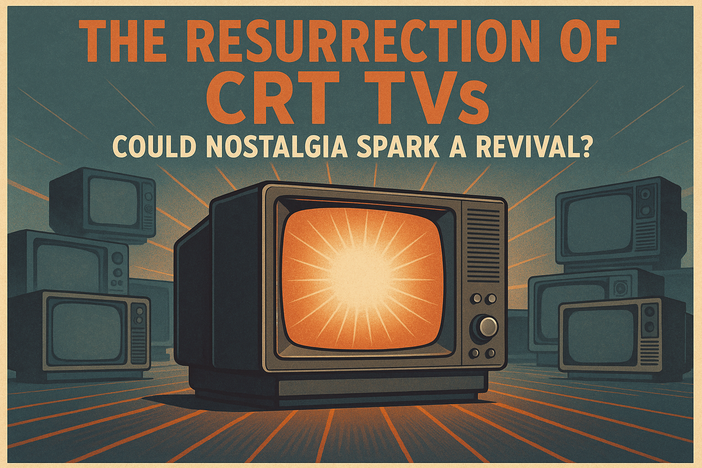
In an era dominated by ultra-slim, high-definition LED displays, it might seem counterintuitive to talk about the resurrection of the once ubiquitous CRT (cathode ray tube) televisions. Yet, a niche community of collectors and retro gamers continues to celebrate these venerable relics of technology. For them, CRT TVs offer a unique viewing and gameplay experience that modern screens simply cannot replicate. But is this passionate enthusiasm enough to rekindle commercial production? Surprisingly, the obstacles are not rooted in consumer interest, but in the dwindling resources that once fed the CRT industry.
CRT televisions are known for their vibrant color reproduction and smooth motion rendering, qualities that have made them indispensable to retro enthusiasts and classic gaming aficionados. These qualities stem from the phosphor coatings and electron beam mechanics intrinsic to CRT technology, which lovingly reproduce retro graphics without the motion blur and pixelation seen in modern flat-panel displays. However, while the demand within this specialized niche is clear, manufacturing these old-school units in today’s market poses unforeseen challenges that go beyond consumer preferences.
One major barrier to the resurgence of CRTs is the scarcity of the components essential for their production. The manufacturing process, replete with toxic materials and requiring specific parts, has largely vanished alongside the decline of CRTs in favor of more environmentally and economically viable technologies. Factories and supply chains once dedicated to cathode ray tube production have pivoted or shut down, leaving behind a knowledge and resource gap that complicates any attempt at revival.
Furthermore, the skills and expertise required to produce CRTs have become increasingly rare. As the consumer electronics industry shifted focus to LCD and OLED technologies, labor forces with CRT expertise have retired or transitioned, taking with them the nuanced understanding of crafting and maintaining these machines. Effectively, we’re looking at a cultural and industrial evolution where the demand for advanced, efficient, and eco-friendly screens has overtaken nostalgia-driven scarcity. It’s an ironic twist, considering that often, technology is adapted or mothballed based on user behavior—but here, it’s the infrastructure that has shifted irreversibly.
In conclusion, while nostalgia and niche demand create a romantic notion of a CRT comeback, practical realities tell a different tale. Even with a subcultural renaissance fueled by retro gaming communities, the revival of CRT manufacturing faces insurmountable barriers in terms of resources and expertise. Instead, enthusiasts might have to focus on preserving existing units or finding innovative ways to simulate CRT experiences with modern technology. As we wistfully reflect on what was, it’s a reminder of how progress leaves both footprints and shadows, occasionally intertwining the two in the timeline of technology.