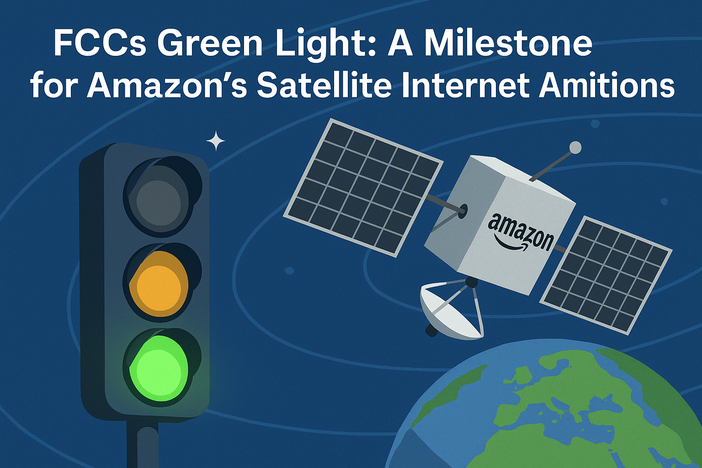
In an exciting development for the world of satellite broadband, the Federal Communications Commission (FCC) has extended a crucial waiver for Amazon’s Leo satellite project, clearing one of the regulatory hurdles that had been looming ominously on its path. This decision effectively pushes back previously set deadlines for launching satellites, allowing Amazon more time to establish its ambitious satellite internet constellation, named Project Kuiper. The waiver is a significant vote of confidence, suggesting that a second major player in satellite internet could soon enhance global connectivity.
Project Kuiper aims to launch a vast array of low Earth orbit (LEO) satellites, designed to blanket the Earth in high-speed internet access, especially reaching underserved and remote areas. This FCC decision demonstrates an understanding of the immense logistical and technical challenges involved in setting up such an expansive network. The agency’s backing implies an acknowledgment of Amazon’s potential to disrupt and expand the market, ultimately providing consumers with more choice and promoting competition that could drive technology and prices in the right direction.
From a broader perspective, the FCC’s decision underscores a shift in priorities towards ensuring robust infrastructure in the ever-growing digital age. By facilitating projects like Kuiper, the U.S. government is signaling its commitment to fostering innovation and expanding digital access across the nation and beyond. The emphasis on such initiatives can be seen as a part of a larger strategy to maintain technological leadership and cater to increasing consumer demands for reliable internet connectivity.
This regulatory relaxation not only benefits Amazon but also places increased pressure on existing satellite internet service providers, most notably SpaceX’s Starlink. Amazon’s entry into this market could potentially prompt a wave of advancements and improvements, as companies strive to stay ahead in a highly competitive landscape. With more players dedicated to developing satellite broadband technology, users stand to gain in terms of service quality and choice.
In conclusion, the FCC’s decision is a strategic move that promotes innovation and competition in satellite broadband services. Amazon’s Project Kuiper now has the green light to progress without immediate pressure, fostering an environment ripe for technological growth and global internet accessibility expansion. As the landscape for satellite broadband continues to evolve, the true beneficiaries will be global consumers who increasingly rely on seamless digital connectivity.