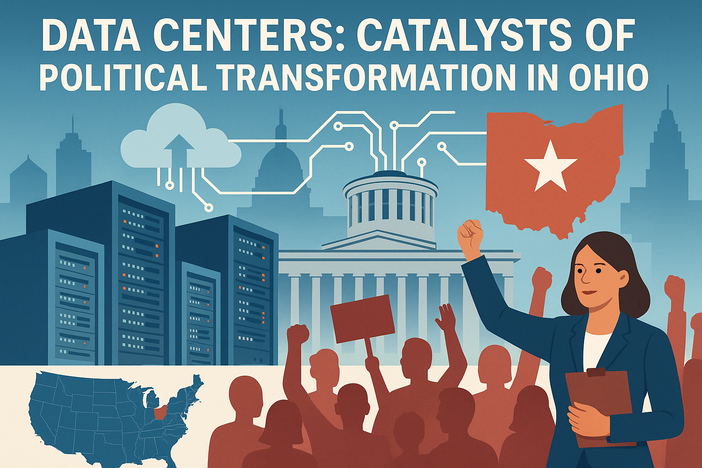
As the digital age persists in weaving its intricate web through our daily lives, regions across the United States are witnessing changes both overt and subtle. In Ohio, a seemingly quiet revolution is afoot with the proliferation of data centers, which many speculate could become instrumental in reshaping the political landscape of the state.
The influx of data centers in Ohio is not merely a boon for job creation and economic growth; it signifies a shift toward a more technologically driven future. Economically, these centers often demand significant infrastructure, such as enhanced power grids and fiber-optic networks, further attracting associated industries. This economic shift could invigorate local economies, leaving a lasting mark on voter perceptions and political allegiances as communities reap the benefits.
Politically, Ohio has long been known as a swing state. The influx of tech companies heralded by data centers could invite demographic changes, drawing tech-savvy professionals and prompting the diversification of voting patterns. These centers may encourage a wave of younger, more progressive voters, potentially altering traditional voting blocs as urbanization and modernization advance within these tech-friendly locales.
Moreover, the deployment of data centers may prompt political leaders to prioritize technological advancement in their platforms, advocating for policies that support continued growth in the tech sector. This can lead to legislative changes, with policymakers striving to strike a balance between maintaining Ohio’s economic appeal and addressing the environmental and social impacts associated with the presence of large-scale data operations.
In conclusion, as data centers continue to take root across Ohio, they present a microcosm of the broader technological transformation reshaping societies worldwide. While it remains to be seen precisely how these centers will redefine Ohio’s political map, it is clear they hold the potential to influence both economic conditions and voter dynamics significantly. The state’s political future may well be decided not only in town halls and state capitals but also across the quiet hums of server rooms, as technology takes its place alongside traditional industries.