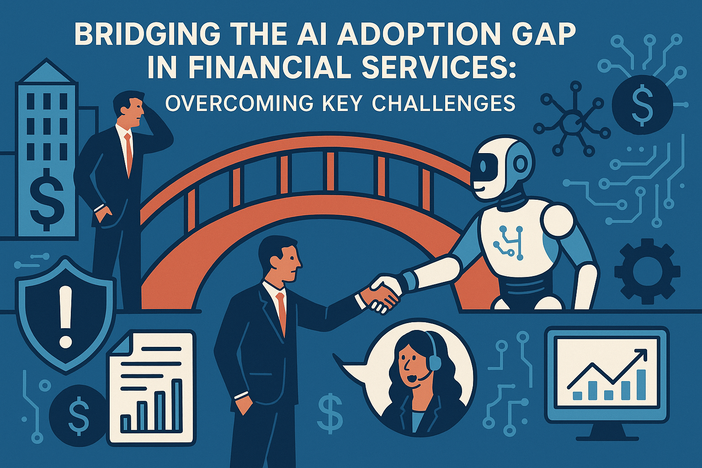
The financial services industry stands on the brink of a technological revolution, with artificial intelligence (AI) promising to transform everything from risk assessment to customer service. However, a recent report by Nutanix highlights significant obstacles preventing organizations from fully embracing AI at scale. Surveying 1,600 global executives in cloud, IT, and engineering from November 2025, the report underscores a common narrative—despite rapid AI adoption, deeper integration is stymied by gaps in governance, infrastructure, and operational readiness.
As the finance sector leans more heavily into AI, inconsistencies in governance frameworks become ever more apparent. Firms often struggle to establish clear guidelines on AI use, encompassing everything from ethical considerations to compliance with regulations. Without robust governance, the potential for misuse grows, and this risk hampers the pace at which AI can be effectively scaled. Addressing these gaps requires not only stronger frameworks but also a cultural shift within organizations towards transparency and accountability.
Beyond governance, the infrastructure upon which AI systems rely presents another barrier. Legacy systems, deeply embedded in financial institutions, can be incompatible with new AI technologies. This incompatibility creates bottlenecks, slowing down transformative efforts and leading to inefficient processes. Upgrading infrastructure demands significant investment, both financially and in terms of time. However, it’s a necessary step for organizations aiming to truly harness AI’s capabilities and drive innovation across their operations.
The report also indicates that operational readiness, or the lack thereof, is a pervasive issue. Many organizations are eager to implement AI but lack the necessary operational strategies to do so effectively. The success of AI initiatives hinges on well-orchestrated implementation plans that align closely with business goals. Therefore, aligning AI projects with strategic vision is crucial. Firms must invest in employee training and development, ensuring their workforce is equipped to operate within an AI-enhanced environment.
In conclusion, while AI offers unprecedented opportunities for advancement in financial services, realizing its full potential requires a concerted effort to overcome significant hurdles. Striking the right balance between innovation and regulation, modernizing outdated infrastructures, and boosting operational readiness are all critical to scaling AI successfully. Only by addressing these challenges head-on can financial institutions transform AI from a buzzword into tangible value, ultimately positioning themselves at the forefront of technological evolution.