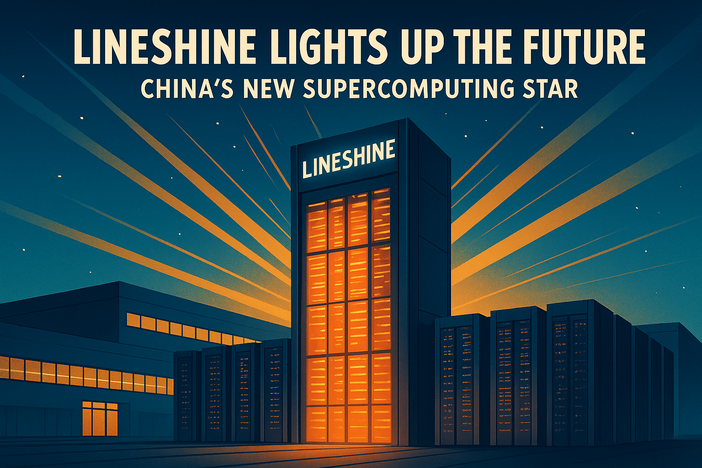
In a groundbreaking stride for technological advancement, China’s LineShine supercomputer has made its grand entrance at the zenith of the TOP500 list. The 67th edition of this prestigious inventory of computing prowess now sees LineShine leading the pack, a feat accomplished by outpacing the previous leader, El Capitan. This achievement marks a significant milestone in the era of exascale computing—a new frontier where computational power is measured in exaflops, or a quintillion calculations per second.
The ascent of LineShine to the top of the list is a testament not only to China’s innovation and determination in high-performance computing but also to the accelerating pace of technological development. Supercomputers like LineShine are the powerhouses behind critical areas such as climate modeling, artificial intelligence, and complex simulations essential for scientific discovery. The High Performance Linpack (HPL) benchmark, used to quantify these machines’ capabilities, demonstrated LineShine’s unparalleled performance, underscoring its potential to redefine computational boundaries.
What sets LineShine apart is not just its raw processing ability but also its architecture, which integrates advanced components to optimize efficiency and scalability. This includes cutting-edge processors and a sophisticated network design that minimizes latency while maximizing throughput. Such innovations are crucial as we navigate towards an increasingly data-driven future, providing the infrastructure support necessary for handling vast and diverse datasets with unprecedented speed and accuracy.
LineShine’s debut at number one paints a broader picture of the global landscape in high-performance computing. While competition has traditionally been fierce, with the United States, Europe, and Japan consistently contributing top contenders, China’s recent triumph highlights a shift. It reflects a growing depth and diversity in the field, where different nations are harnessing their resources and expertise to push the boundaries of what these machines can achieve. As such, this changing dynamic may spur further innovation and collaboration across borders.
In conclusion, the emergence of LineShine as the world’s leading supercomputer symbolizes an exciting new chapter in the era of exascale computing. As we move forward, it will be interesting to see how this technological leap influences scientific research, industry applications, and international collaborations. The potential for supercomputers to tackle ever-more-complex problems remains vast, and with advancements like LineShine, the future of computing appears brighter than ever. This evolving landscape not only promises remarkable technological development but also invites a broader conversation on how we can best harness these capabilities for the betterment of society as a whole.